Output is not yet an outcome.
Why optimized AI texts are not automatically more effective.
A new study in Nature Human Behaviour analysed using 1.5 million petitions on Change.org what the introduction of an AI writing assistant changed.
The texts became longer, linguistically more complex, and above all, more similar to one another. However, the performance measures examined – participation through comments and signatures – did not improve.
The result of this study is not surprising to me in 1st place, but it is nevertheless fundamental:
- Not surprisingly, because the same principle can be applied to all communicative actions, e.g. a presentation: an optimized presentation according to all the rules does not make it effective for long if the tools used are not authentically and credibly implemented by the speaker. This may make the presentation rhetorically sophisticated, but not effective in the sense of: it has an effect on the audience. The person and their message must be palpable behind the perfect construct to actually achieve an effect.
- The result is therefore fundamentally, because it shows that linguistic optimization alone does not guarantee greater effectiveness even with texts. If the human being is not noticeably affected in any way, the effect remains absent.
The result confirms what I have been experiencing in my work for decades: communication is only effective when – despite all optimization – the personality remains perceptible. The human being is precisely distinguished by the fact that it is NOT a machine and therefore cannot be optimized objectively to the last detail.
Perfection therefore lies in the very conscious acceptance of the imperfect, the not-fully-optimized, the entirely one’s own. Not only in the concrete conversation or presentation, but also in a text.
The core question is this: If we can generate convincingly sounding words at any time, what else can we contribute?
And the simplest way is to substantiate a statement with your own observations and experiences: that is, to ask yourself the question, „What specific observation makes my statement concrete?“
And yes, that means one thing: we cannot have everything optimized, prepared, or even implemented by AI. It always requires our own contribution, our own perspective – ultimately, our own performance.
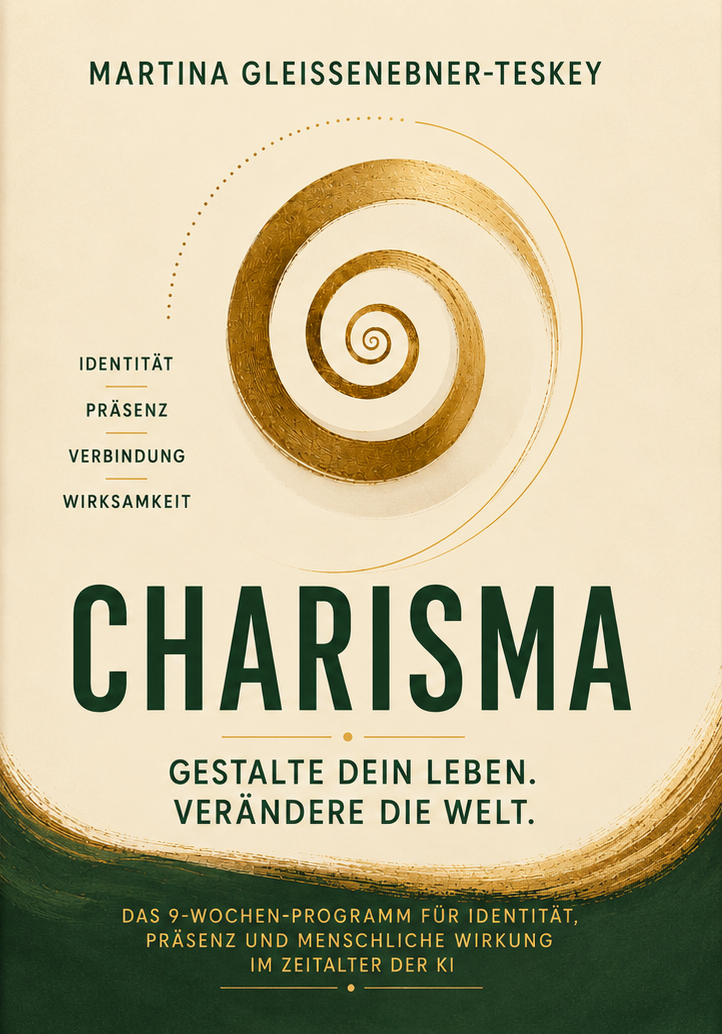
And only in this lies the possibility of charismatic influence: it is deeply personal and cannot be delegated to a system. I naturally also address this topic in the expanded edition of my book:„Charisma: Shape your life. Change the world.“
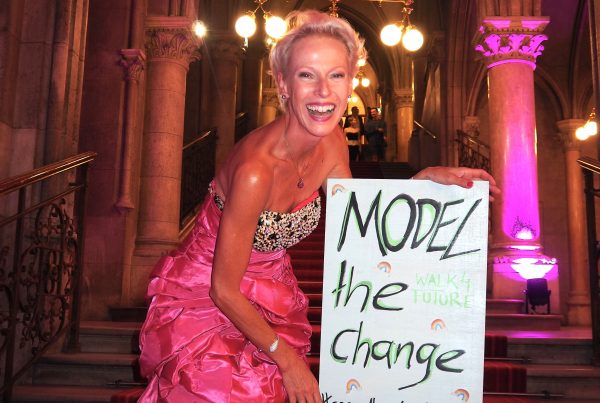
The contribution image is not new, but extremely appropriate.It comes from the premiere night of the film Å ØVE by Laurens Pérol, in which a musician sets off on foot to her rehearsal venue in Oslo in accordance with her values.
And this is the question we must ask ourselves again and again: what effort am I prepared to make so that the result reflects ME (= my values)?
How will you recognize ME?
THAT is the question in the age of AI.